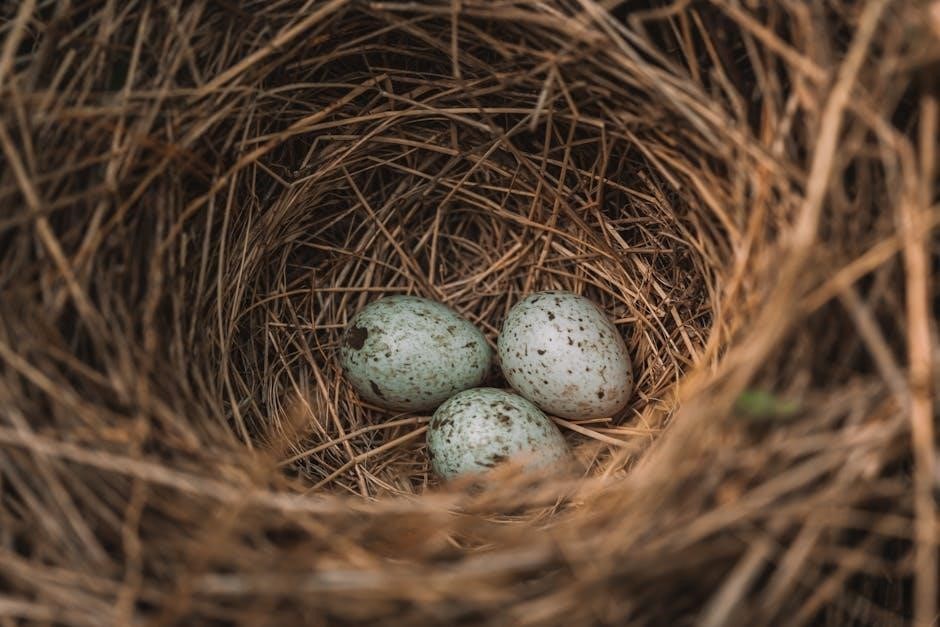
Bird nests, diverse in form and function, are crucial for avian reproduction and survival, offering protection and a nurturing environment․
Detailed PDF resources showcase the incredible variety, from simple scrapes to elaborate woven structures, reflecting evolutionary adaptations․
Studying these structures reveals fascinating insights into bird behavior, material selection, and the intricate link between nest design and chick development․
The Significance of Nest Study
Understanding bird nests extends far beyond mere observation; it’s a gateway to comprehending avian evolutionary biology, behavioral ecology, and conservation needs․ Detailed PDF guides and academic papers, like those found on PMC, highlight how nest construction reveals crucial information about a species’ life history․
Analyzing nest materials, techniques, and locations provides insights into resource availability, predator pressures, and the cognitive abilities of birds․ Studying nests allows researchers to assess the impact of environmental changes on breeding success․ For example, examining nests can reveal how birds adapt to altered material availability or increased temperatures․
Furthermore, nest studies contribute to broader ecological understanding, informing conservation strategies and highlighting the interconnectedness of species within their habitats․ Accessing online databases of nest images aids in identification and comparative analysis, furthering our knowledge of these remarkable structures․
Historical Context of Bird Nest Research
Early investigations into bird nests were often driven by curiosity and a desire to document natural history, with collections forming the basis of museum specimens․ While initially descriptive, focusing on types of bird nests as cataloged in early PDF field guides, research gradually shifted towards understanding the why behind nest construction․
The 19th and 20th centuries saw increased scientific rigor, with ornithologists beginning to explore the relationship between nest design and breeding success․ Landmark studies examined material selection, weaving techniques, and the influence of environmental factors․
Recent advancements, fueled by access to digital resources and databases, allow for meta-analyses and comparative studies across species․ Contemporary research, often detailed in academic papers, builds upon this historical foundation, utilizing modern techniques to unravel the complexities of avian nest building․
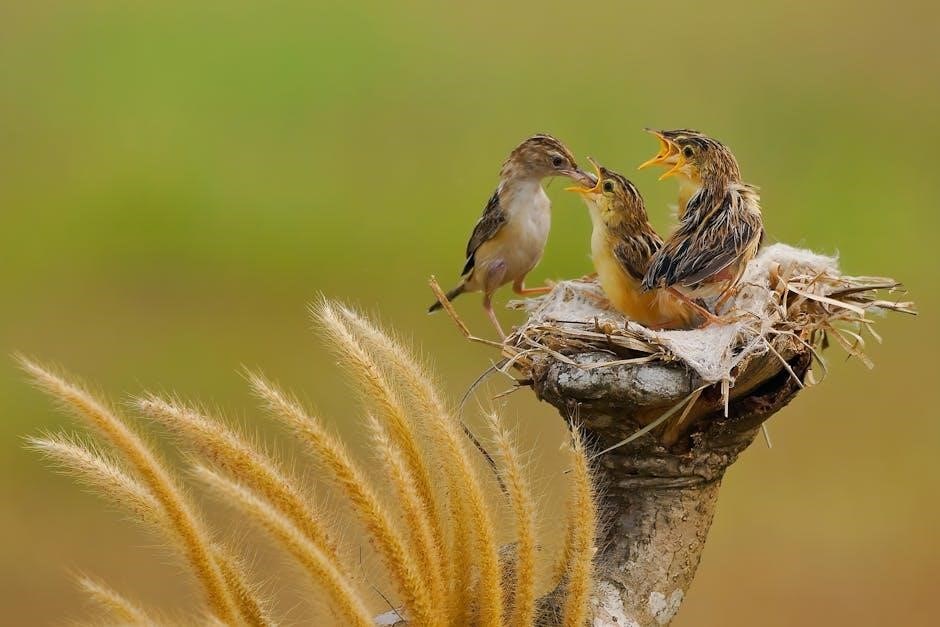
Types of Bird Nests Based on Location
Bird nests exhibit remarkable diversity in placement, ranging from concealed ground nests to elaborate suspended structures, as detailed in numerous PDF guides․
Location profoundly impacts nest design, predator avoidance, and chick survival, showcasing evolutionary adaptations to varied habitats․
Cavity Nests
Cavity nests, frequently detailed in ornithological PDF resources, represent a fascinating adaptation where birds utilize pre-existing holes or excavate their own within trees, cacti, or even artificial structures․
These enclosed spaces offer significant protection from predators and harsh weather conditions, creating a secure environment for developing chicks․ Woodpeckers are renowned for their cavity-excavating skills, while species like chickadees and nuthatches readily utilize existing cavities or abandoned woodpecker holes․
PDF guides often illustrate how cavity size and depth are carefully selected based on the bird species, influencing brood size and chick development․ The internal structure is typically lined with soft materials like wood shavings, feathers, or plant down to provide insulation and cushioning․
Platform Nests
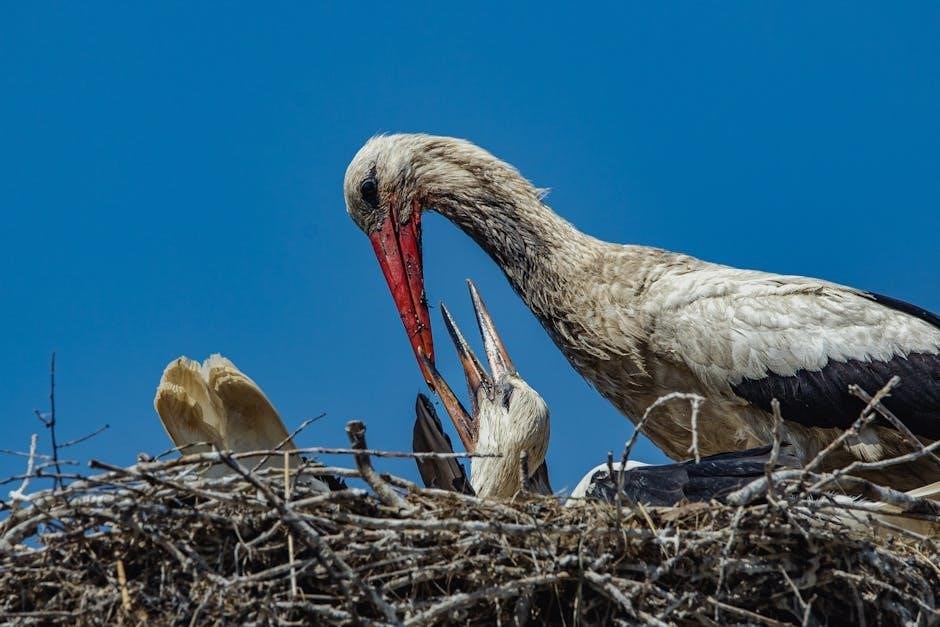
Platform nests, comprehensively documented in avian PDF guides, are relatively simple structures built on forks of branches, ledges, or even human-made platforms․ These nests typically consist of a flat base constructed from sticks, twigs, and other readily available materials․
Commonly observed in species like crows, magpies, and some raptors, platform nests are often substantial in size, representing a long-term investment by the breeding pair․ PDF resources highlight the gradual addition of materials over multiple breeding seasons, resulting in large, robust structures․
While offering less enclosure than cavity nests, platform nests provide a stable base for eggs and chicks․ They are frequently lined with softer materials like grasses, moss, or feathers to enhance comfort and insulation, as detailed in specialized PDF studies․
Ground Nests
Ground nests, extensively illustrated in various avian PDF field guides, represent a vulnerable yet widespread nesting strategy․ These nests are constructed directly on the ground, often concealed within vegetation for camouflage and protection․ Typically, they are shallow depressions lined with grasses, leaves, and other plant matter․
Species like Killdeer and many game birds favor this method, relying heavily on cryptic coloration and distraction displays to deter predators․ PDF analyses reveal that ground nest construction prioritizes blending with the surrounding environment, minimizing visibility to potential threats․
Detailed PDF resources emphasize the importance of nest site selection, favoring locations with dense cover and good drainage․ While offering minimal physical protection, ground nests are often quickly built and abandoned if disturbed, a strategy detailed in behavioral PDF reports․
Suspended Nests
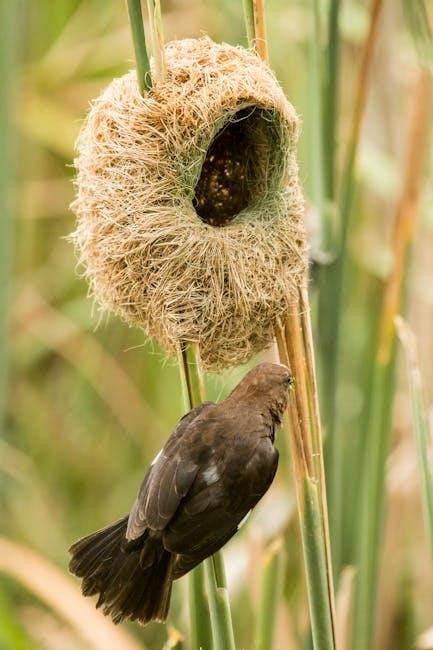
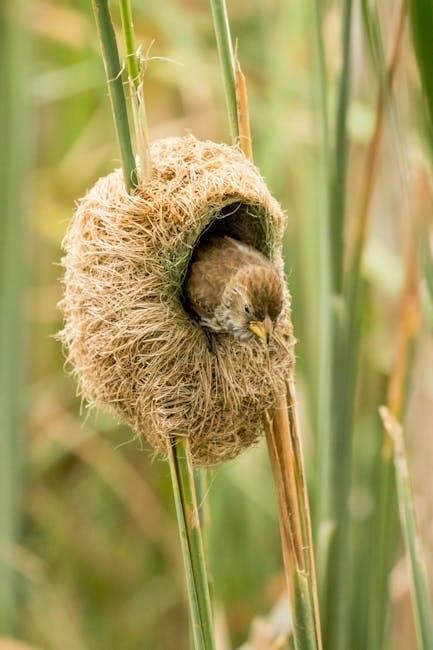
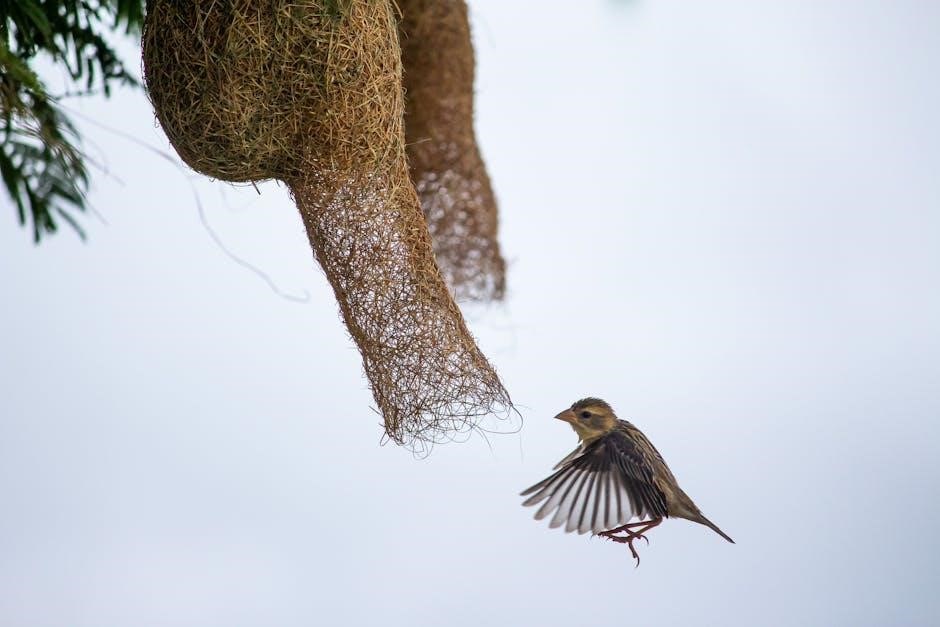
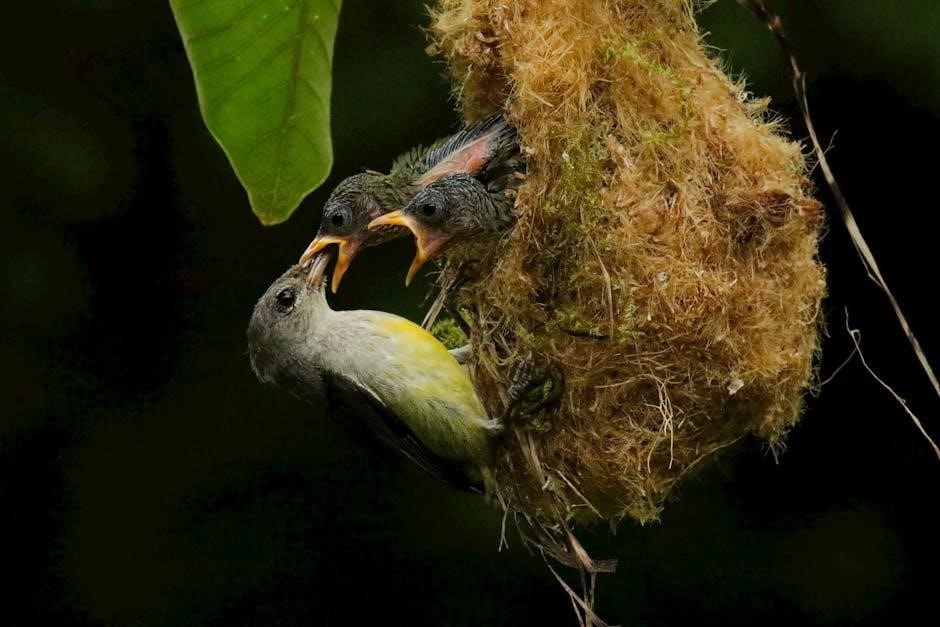
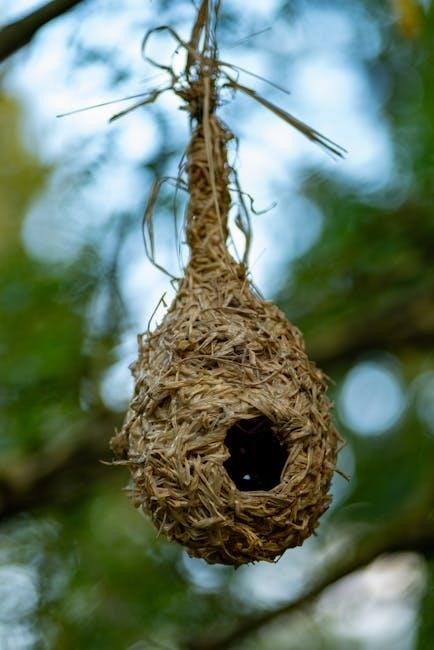
Suspended nests, beautifully documented in numerous avian PDF guides, are remarkable examples of avian engineering․ These nests hang from branches, often utilizing strong plant fibers to create a secure and protected cradle․ Orioles are particularly renowned for their intricately woven, pouch-like suspended nests, detailed in specialized PDF studies․
PDF resources highlight the use of flexible materials, allowing the nest to sway with the wind, deterring predators and providing stability․ Long-tailed Tits exemplify this, using cobwebs to bind lichen and moss, creating expandable nests for large broods, as shown in behavioral PDF analyses․
The construction process, thoroughly illustrated in PDF field guides, involves meticulous weaving and knotting techniques, demonstrating advanced avian dexterity and problem-solving skills․ These nests offer significant protection from ground predators․
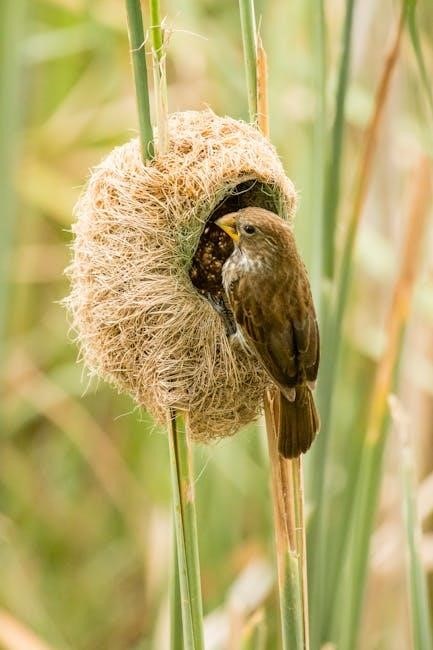
Types of Bird Nests Based on Construction Material
PDF guides reveal nests built from diverse materials – grass, mud, sticks, and down – each offering unique structural and insulating properties․
Material choice reflects availability and species-specific adaptations, thoroughly documented in avian construction PDFs․
Grass Nests
Grass nests are among the most commonly observed nest types, frequently detailed in comprehensive PDF guides on avian architecture․ These nests, often cup-shaped, are skillfully constructed using various grass stems, meticulously woven together for strength and stability․
Discover Wildlife notes how birds “construct a cup from grass stems, tucking and then twisting them into each other,” demonstrating a remarkable building technique․ Finer grasses reinforce the rim, while moss and leaves provide camouflage․
PDF resources illustrate that the specific grass species utilized varies geographically and seasonally, based on availability․ These nests offer adequate insulation and are relatively lightweight, making them suitable for placement in trees or shrubs․ Detailed images in PDFs showcase the intricate weaving patterns and the overall structural integrity of these natural creations․
Mud Nests
Mud nests represent a fascinating adaptation in avian architecture, extensively documented in various PDF resources dedicated to bird nesting habits․ These nests are primarily constructed from mud, often mixed with grasses, twigs, and other fibrous materials for added reinforcement․
While the provided text doesn’t detail specific mud nest builders, PDF guides commonly feature examples like swallows and ovenbirds, known for their elaborate mud constructions․ The mud provides excellent thermal mass, helping to regulate temperature within the nest․
PDFs illustrate how birds carefully select mud with appropriate consistency and moisture content․ These nests are often built on cliffs, under eaves, or in other sheltered locations․ Detailed diagrams in PDFs showcase the layering techniques and the resulting durable, protective structures․
Stick Nests
Stick nests are among the most recognizable avian constructions, thoroughly detailed in numerous PDF guides on bird nesting behavior․ These substantial nests are built primarily from twigs and branches, often forming large, bulky structures․ PDF resources highlight that raptors, crows, and some songbirds frequently employ this building method․
The provided information doesn’t specify construction details, but PDFs demonstrate how birds interlock sticks to create a stable framework․ They often line the interior with softer materials like grasses or feathers for insulation․
PDFs illustrate the impressive size and durability of stick nests, some being used for multiple breeding seasons and continually expanded upon․ These nests offer robust protection from predators and the elements, as shown in detailed diagrams within the PDFs․
Down & Feather Lined Nests
Down & feather-lined nests represent a pinnacle of avian comfort, extensively documented in PDF guides focusing on nest construction․ These nests, often built within existing structures or as additions to other nest types, prioritize thermal regulation for developing chicks․ PDF resources showcase waterfowl, and some songbirds utilizing this technique․
Detailed PDFs illustrate how birds meticulously collect soft materials – down, feathers, and plant fibers – to create a plush, insulating layer․ This lining provides crucial warmth, particularly important in cooler climates․
PDF analyses reveal that the density of the lining correlates with ambient temperature, demonstrating adaptive nest building․ These nests, as shown in PDF diagrams, offer exceptional protection and contribute significantly to chick survival rates․
Specific Nesting Techniques & Examples
PDF guides detail remarkable avian building skills, like oriole weaving and long-tailed tit cobweb use, showcasing species-specific adaptations․
These PDFs illustrate ingenious camouflage and nest expansion techniques for successful chick rearing․
Weaving Techniques (e․g․, Orioles)
Orioles are renowned for their intricate woven nests, a skill extensively documented in various PDF resources dedicated to avian architecture․ These PDFs showcase how orioles meticulously interlock grasses and plant fibers, creating a suspended pouch-like structure․
The process involves looping materials around supporting branches, effectively ‘weaving’ a strong and resilient nest․ Detailed diagrams within these PDFs illustrate the precise knotting and looping techniques employed․ The resulting nest is not only structurally sound but also remarkably flexible, accommodating the growing chicks․
PDF guides also highlight variations in weaving styles among different oriole species, demonstrating the evolutionary refinement of this complex behavior․ Studying these nests through PDF documentation provides valuable insights into avian dexterity and problem-solving abilities․
Cobweb Use in Nest Building (Long-tailed Tits)
Long-tailed Tits exhibit a remarkable nesting behavior, heavily reliant on the use of cobwebs, a detail richly illustrated in specialized PDF guides on bird nests․ These PDFs demonstrate how these tiny birds meticulously collect spider silk to bind their nest materials – moss, lichen, and feathers – together․
The adhesive properties of cobwebs are crucial, allowing the nest to expand significantly as the chicks grow, accommodating their large broods․ PDF documentation showcases the ingenious way they ‘stitch’ the nest with cobwebs, creating a flexible and resilient structure․
These PDF resources emphasize that this technique is vital for the species’ reproductive success, providing a secure and adaptable nesting environment․ Studying these nests via PDFs reveals a fascinating example of avian innovation and resourcefulness․
Camouflage Strategies in Nest Construction
PDF guides detailing bird nests reveal sophisticated camouflage techniques employed by various species to protect their vulnerable eggs and chicks․ Many birds actively incorporate materials that blend seamlessly with their surroundings, minimizing detection by predators․ Detailed images in these PDFs show how birds utilize moss, leaves, and even bark fragments․
For example, some species meticulously arrange materials to match the color and texture of nearby vegetation, effectively concealing their nests․ PDF resources highlight that this isn’t random; birds demonstrate a clear understanding of visual deception․
These PDFs illustrate how careful material selection and placement are crucial for nest concealment, showcasing a remarkable adaptation for survival․ Studying these strategies through PDF documentation provides valuable insight into avian behavioral ecology․
Expansion Capabilities of Nests
PDF resources dedicated to bird nests demonstrate a fascinating aspect of avian architecture: the ability of some nests to expand as chicks grow․ This is particularly evident in species like the Long-tailed Tit, as detailed in numerous PDF guides․ These birds ingeniously utilize cobwebs as a binding agent, creating a flexible structure․
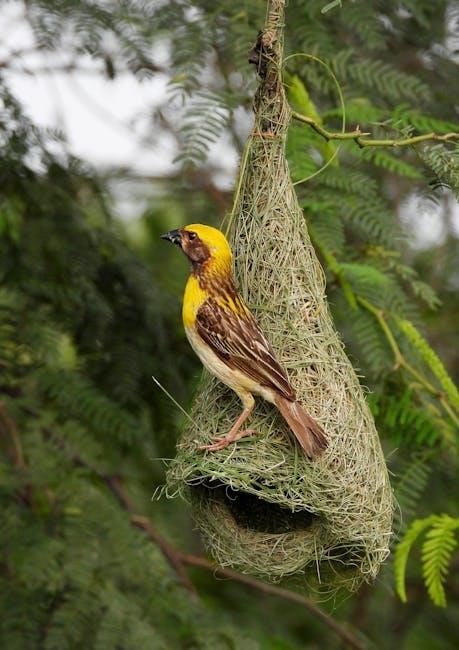
The elasticity provided by the cobwebs allows the nest walls to stretch, accommodating a rapidly increasing brood size․ PDF documentation showcases images of these expanding nests, highlighting the remarkable engineering skills of these small birds․
These PDFs reveal that this expansion capability is vital for ensuring all chicks have sufficient space and comfort, demonstrating a remarkable adaptation for successful breeding․ Further study via PDFs reveals this isn’t universal, but a specialized trait․
Factors Influencing Nest Construction
PDF guides reveal nest building is shaped by material properties, bird experience, resource availability, and genetic programming—all impacting construction choices․
Detailed PDFs illustrate how birds select materials based on structural integrity and adapt to environmental cues for optimal nesting success․
Material Selection Based on Structural Properties
PDF resources demonstrate that birds don’t randomly choose nest materials; they actively assess structural properties for optimal construction․ Studies, like those detailed in PMC publications, show Zebra Finches selecting string based on its strength and flexibility when building nests in captivity․
This indicates an innate understanding of how different materials contribute to nest stability and integrity․ Birds prioritize materials offering tensile strength for weaving, pliability for shaping, and insulation for temperature regulation․ The choice isn’t solely about availability, but a calculated decision based on the material’s ability to fulfill specific structural needs․
PDF guides often illustrate how birds test materials, pulling and manipulating them before incorporation, ensuring suitability․ This meticulous process highlights the importance of structural properties in successful nest building, directly impacting chick survival․
Influence of Bird Experience on Material Choice
PDF analyses of nest construction reveal that a bird’s prior experience significantly influences its material selection․ Research, accessible through PMC, demonstrates that captive Zebra Finches refine their material choices with repeated nesting attempts, favoring materials that proved successful previously․
This learning process suggests birds aren’t solely guided by instinct, but also by accumulated knowledge․ First-time nesters may experiment more, while experienced birds exhibit greater consistency in their selections․ PDF field guides often note regional variations in nest materials, potentially reflecting learned preferences passed down through generations․
The ability to adapt material choices based on past outcomes enhances nesting efficiency and success, showcasing the interplay between innate behavior and learned experience․
Synchronization with Resource Availability
PDF resources detailing avian breeding cycles consistently highlight the critical synchronization between nesting and peak resource availability․ Birds strategically time their nesting activities to coincide with periods of increased temperature, extended daylight, and abundant food sources – essential for chick development․
This timing ensures adequate nutrition for rapidly growing offspring․ PDF guides often illustrate how specific species initiate nesting when particular food items, like insects or seeds, become plentiful․ Disruptions to resource availability, documented in academic papers, can negatively impact breeding success․
This precise coordination demonstrates a remarkable adaptation, maximizing reproductive output by aligning nesting with optimal environmental conditions․
Genetic Programming of Nest Building
PDF analyses of bird nest construction reveal that intricate techniques aren’t learned, but largely inherited through genetic programming․ Each species possesses an innate blueprint for nest design, dictating fundamental aspects like shape, size, and material preference․
Detailed PDF guides demonstrate how even first-time breeders construct species-typical nests with remarkable accuracy․ While experience can refine techniques, the core building behaviors are genetically encoded, developed through evolutionary processes․
These inherited instructions ensure consistent nest quality across generations, contributing to successful reproduction․ Academic PDFs explore the neurological basis of these instincts, highlighting the complex interplay between genes and behavior․
Nest Adaptations for Chick Development
PDF resources illustrate how nest design directly supports chick development, influencing thermal regulation, predator protection, and brood size capacity․
Nests are adapted to provide optimal conditions for growing chicks, showcasing evolutionary pressures and species-specific needs․
Nest Size and Brood Size Correlation
Detailed PDF guides reveal a strong correlation between nest size and the typical brood size for a given bird species․ Larger nests, often constructed by birds anticipating larger families, provide ample space for growing chicks, reducing competition for resources within the confined nest environment․
For example, the Long-tailed Tit, known for its exceptionally large broods, builds nests that expand using cobwebs, accommodating a growing number of offspring․ Conversely, species with smaller broods generally construct more compact nests․
This relationship isn’t merely coincidental; it’s a crucial adaptation ensuring adequate space for thermoregulation, minimizing chick mortality, and maximizing fledging success․ Analyzing nest dimensions, as documented in various PDF studies, offers valuable insights into avian reproductive strategies and population dynamics․
Thermal Regulation in Nest Design
PDF resources dedicated to avian architecture highlight the critical role of nest design in thermal regulation․ Birds meticulously construct nests to maintain optimal temperatures for developing embryos and chicks, shielding them from both excessive heat and chilling cold․
Material selection is paramount; down and feather-lined nests provide superior insulation, while mud nests offer thermal mass․ Clever designs, like the expandable nests of Long-tailed Tits, also aid in temperature control․
Furthermore, nest location—whether in a shaded tree cavity or exposed on a platform—influences thermal conditions․ Detailed PDF analyses demonstrate how nest structure directly impacts chick survival rates, showcasing the evolutionary pressures driving these ingenious adaptations․
Protection from Predators
PDF guides on bird nests consistently emphasize predator defense as a primary driver of nest construction․ Birds employ diverse strategies, from nest placement to material choice, to minimize risk to their vulnerable eggs and chicks․
Camouflage is key; nests are often constructed with materials that blend seamlessly with the surrounding environment, like moss and leaves․ Location also matters – concealed nests in dense foliage or cavities offer greater protection․
Some species, like those featured in detailed PDF studies, build nests with thorny materials or position them near deterrents․ Understanding these adaptations, documented in comprehensive resources, reveals the constant evolutionary arms race between birds and their predators․
Resources for Further Study (PDF Focus)
PDF databases and academic papers (like those on PMC) offer detailed nest images and construction analyses․
Field guides with identification keys provide practical tools for studying avian architecture and understanding species-specific nest designs․
Online Databases of Bird Nest Images
Numerous online resources provide extensive photographic documentation of bird nests, invaluable for researchers and enthusiasts alike․ These databases often categorize nests by species, location, and construction material, facilitating comparative studies․ Accessing these resources, frequently available as PDF downloads or image galleries, allows for detailed visual analysis of nest architecture․
Researchers can utilize these images to identify patterns in nest building techniques, observe variations within species, and track changes over time․ Several ornithological societies and university research groups maintain publicly accessible databases․ These collections are crucial for understanding the diversity of avian nesting strategies and the ecological factors influencing nest design․ The visual data complements textual descriptions found in academic papers, enhancing comprehension and aiding in accurate nest identification․
Academic Papers on Nest Construction (PMC)
PubMed Central (PMC) hosts a wealth of peer-reviewed research on avian nest construction, often available as full-text PDF articles․ These papers delve into the behavioral ecology of nest building, exploring factors influencing material selection and architectural design․ Studies, like those by Bailey et al․ (2014), investigate how birds choose nesting materials based on structural properties and prior experience․
Researchers utilize PMC to access cutting-edge findings on topics ranging from weaving techniques to camouflage strategies; These publications provide detailed analyses of nest components, construction processes, and the adaptive significance of specific nest features․ Accessing these scholarly resources is vital for a comprehensive understanding of the complexities of avian nest building and its evolutionary underpinnings․
Field Guides with Nest Identification Keys
Field guides dedicated to birds frequently include sections on nest identification, often with detailed photographs and descriptions – some available as PDF downloads․ These guides are invaluable for identifying nests encountered in the field, categorizing them by location (cavity, platform, ground, suspended) and construction material (grass, mud, sticks, down)․
Identification keys help users narrow down possibilities based on nest shape, size, materials used, and habitat․ These resources often highlight unique nesting behaviors, like the cobweb use by Long-tailed Tits to create expandable nests․ Utilizing these guides enhances observational skills and fosters a deeper appreciation for the diversity of avian nesting strategies․