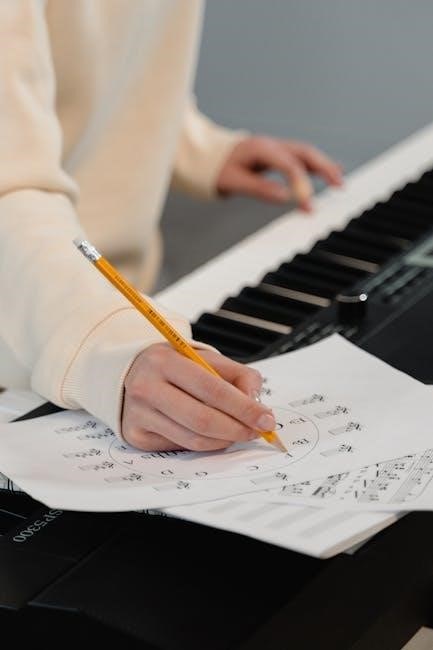
Jazz piano chord progressions unlock improvisation and harmonic richness, often documented in PDF resources for study. Understanding these structures is vital for piano players.
These chord progressions, like ii-V-I, form the bedrock of jazz standards, offering a pathway to expressive musicality and harmonic exploration on the piano.
What is a Jazz Chord Progression?
A jazz chord progression is a sequence of chords used by jazz musicians, forming the harmonic foundation of a song. Unlike classical music’s often predictable paths, jazz progressions embrace complexity and improvisation. These aren’t simply random chords; they’re carefully chosen to create specific moods and harmonic movement.
Frequently, you’ll encounter these progressions documented in PDF format, offering a convenient way to study and practice. Common examples include the ii-V-I, found extensively in jazz standards, and the progression from “Autumn Leaves.” These PDF resources often include chord charts and Roman numeral analysis, aiding comprehension.
The beauty lies in the flexibility; musicians can alter and embellish these progressions, adding extensions (9ths, 11ths, 13ths) and substitutions. Understanding the underlying theory, often presented in piano jazz chord progressions PDF guides, allows for informed improvisation and harmonic creativity at the piano.
The Importance of Understanding Chord Progressions
Grasping jazz chord progressions is paramount for any piano player aspiring to improvise and compose within the genre. It moves you beyond simply playing notes to understanding why certain chords follow each other, unlocking harmonic possibilities.
Many resources, including comprehensive piano jazz chord progressions PDF guides, detail these structures. These PDFs aren’t just lists of chords; they reveal the underlying harmonic functions and relationships. Knowing these functions allows you to predict where the music is going and create compelling solos.
Furthermore, understanding progressions facilitates reharmonization – replacing existing chords with more sophisticated ones. Accessing piano tutorials and PDFs on harmonic analysis empowers you to deconstruct existing songs and build your own unique arrangements, fostering creativity and a deeper connection to the music.

Fundamental Jazz Chord Progressions
Jazz piano relies on core progressions like ii-V-I, Autumn Leaves, and Rhythm Changes, often detailed in PDF guides for piano study and practice.
The ii-V-I Progression
The ii-V-I progression is arguably the most fundamental building block in jazz harmony, frequently found in jazz piano repertoire and extensively covered in PDF resources. It creates a strong harmonic pull towards resolution.
In the key of C major, this translates to Dm7 – G7 – Cmaj7. The Dm7 (ii) acts as a pre-dominant chord, leading naturally to the G7 (V), a dominant chord creating tension. Finally, the Cmaj7 (I) provides a satisfying resolution, establishing the tonic.
PDF guides often demonstrate various voicings and inversions for these chords on the piano, alongside exercises for practicing smooth transitions. Understanding this progression unlocks countless jazz standards and improvisation possibilities. Roman numeral analysis (ii-V-I) is crucial for transposing and understanding its function in different keys. Mastering this progression is essential for any aspiring jazz piano player.
Autumn Leaves Progression
The “Autumn Leaves” progression, a staple in jazz piano, is a captivating harmonic sequence often detailed in PDF instructional materials. It’s a minor key progression, typically starting with Am7, D7, Gm7, and C7, creating a melancholic yet beautiful sound.
Many PDF resources break down the chord voicings and demonstrate how to navigate the harmonic changes on the piano. The progression’s cyclical nature allows for extended improvisation and exploration of different harmonic colors. It’s a fantastic study piece for understanding minor jazz harmony.
Analyzing this progression reveals a series of ii-V relationships within the minor key. Jazz piano students often use PDF exercises to practice comping and soloing over this progression, developing their ear and harmonic vocabulary. It’s a cornerstone of the jazz repertoire and a must-learn for any serious player.
Rhythm Changes Progression
The “Rhythm Changes” progression, derived from George Gershwin’s “I Got Rhythm,” is a foundational element in jazz piano, frequently found in PDF learning materials. It’s characterized by its AABA form, with the ‘A’ sections built around a I-VI-II-V chord movement.
PDF resources often provide detailed analyses of the harmonic substitutions and variations commonly used in jazz interpretations. The ‘B’ section introduces a contrasting harmonic landscape, offering opportunities for dynamic improvisation on the piano. Mastering this progression is crucial for any aspiring jazz musician.

Numerous PDF exercises focus on applying different voicings, scales, and arpeggios over the “Rhythm Changes.” It’s a challenging yet rewarding progression that develops harmonic awareness and improvisational skills. Understanding its structure unlocks a vast repertoire of jazz standards and provides a solid foundation for further harmonic exploration.

Building Blocks: Jazz Chords
Jazz piano relies on 7th chords – major, minor, and dominant – often detailed in PDF guides. Extended chords (9ths, 11ths, 13ths) add harmonic color.
Major 7th Chords
Major 7th chords are foundational in jazz piano harmony, lending a sophisticated and colorful sound to chord progressions. Often found within PDF resources dedicated to jazz theory, these chords are built with a root, major third, perfect fifth, and a major seventh interval. For example, a Cmaj7 chord consists of C-E-G-B.
Understanding their construction is crucial for both playing and improvising. They frequently appear as the ‘I’ chord in ii-V-I progressions, providing a sense of resolution. Many piano jazz chord progressions PDF tutorials emphasize recognizing and utilizing these chords in various keys. Their bright, yet mellow quality distinguishes them from simple major triads, adding depth and nuance to jazz arrangements. Mastering these chords is a key step towards unlocking the harmonic language of jazz.
These chords are often used to create a lush and sophisticated harmonic texture, and are a staple in many jazz standards.
Minor 7th Chords
Minor 7th chords are essential components of jazz piano harmony, frequently detailed in piano jazz chord progressions PDF guides. Constructed with a root, minor third, perfect fifth, and minor seventh interval, they create a melancholic and sophisticated sound. A Dm7 chord, for instance, comprises D-F-A-C.
These chords often function as the ‘ii’ chord in ii-V-I progressions, adding a characteristic jazz flavor. PDF resources often illustrate their application in various keys and voicings. They are also commonly found in jazz standards like “Autumn Leaves”. Understanding their role in harmonic movement is vital for improvisation and comping.
The minor 7th chord’s subtle tension and release contribute significantly to the emotional depth of jazz music. Mastering these chords unlocks a wider palette of harmonic possibilities for the piano player.
Dominant 7th Chords
Dominant 7th chords are foundational to jazz piano, extensively covered in piano jazz chord progressions PDF materials. Built with a root, major third, perfect fifth, and minor seventh, they create a strong pull towards resolution, often to the tonic chord. A G7 chord, for example, consists of G-B-D-F.
These chords frequently function as the ‘V’ chord in ii-V-I progressions, providing harmonic drive and tension. PDF resources demonstrate their versatile voicings and inversions. They are crucial in jazz standards like “Rhythm Changes”. Understanding their function is key to effective improvisation and harmonic analysis.
The dominant 7th’s inherent instability creates a compelling harmonic motion, essential for the jazz sound. Mastering these chords expands a piano player’s harmonic vocabulary and improvisational skills, as detailed in many instructional PDFs.
Extended Jazz Chords (9ths, 11ths, 13ths)

Extended jazz chords – 9ths, 11ths, and 13ths – add color and sophistication, thoroughly explained in piano jazz chord progressions PDF guides. These chords build upon the dominant 7th, incorporating additional intervals. A Cmaj9, for instance, includes C-E-G-B-D. They move beyond basic harmony, offering richer textures.
PDF resources detail voicings and applications of these chords, demonstrating how they create nuanced harmonic movement. They’re frequently used in reharmonization and upper structure triads. Understanding these extensions is vital for modern jazz improvisation and arranging.
These chords aren’t merely additions; they alter the chord’s function and emotional impact. Mastering them, as shown in instructional PDFs, unlocks a deeper understanding of jazz harmony and expands a piano player’s expressive palette, creating a more complex sound.

Analyzing Jazz Chord Progressions
Jazz chord progression analysis, often found in PDF guides, utilizes Roman numerals and functional harmony to decode harmonic movement and understand piano voicings.
These PDFs help musicians dissect jazz standards, revealing underlying structures and facilitating improvisation.
Roman Numeral Analysis

Roman numeral analysis is a cornerstone of understanding jazz chord progressions, and numerous PDF resources dedicate sections to this vital skill. It involves representing each chord within a progression using Roman numerals based on its relationship to the key. Major chords are denoted with uppercase numerals (I, IV, V), while minor chords use lowercase (ii, iii, vi).
Diminished and augmented chords receive special symbols (e.g., vii°). This system allows musicians to quickly grasp the harmonic function of each chord – tonic, subdominant, or dominant – regardless of the specific key. PDF guides often illustrate this with examples like the ii-V-I progression, showing how ii, V, and I relate to the tonic.
Analyzing jazz piano pieces with Roman numerals facilitates transposition, improvisation, and composition. It provides a framework for recognizing common patterns and understanding how chords interact harmonically. Mastering this technique, aided by PDF study materials, is crucial for any aspiring jazz musician.
Functional Harmony in Jazz
Functional harmony in jazz explains why certain chord progressions sound pleasing and create musical tension and release. PDF resources on piano jazz chord progressions emphasize this concept, detailing how chords fulfill specific roles – tonic, predominant, and dominant. The dominant chord (V) strongly pulls towards the tonic (I), creating resolution.
Understanding these functions allows piano players to predict chord changes and improvise effectively. Jazz frequently utilizes extended harmonies (7ths, 9ths, 11ths) within this framework, adding color and sophistication. PDF guides often break down common progressions like ii-V-I, illustrating the functional role of each chord.
While traditional functional harmony provides a foundation, jazz also incorporates non-functional progressions. However, grasping the core principles, as presented in piano jazz chord progression PDF materials, is essential for navigating the complexities of jazz harmony and improvisation.
Non-Functional Harmony in Modern Jazz
Modern jazz frequently departs from traditional functional harmony, embracing chord progressions that don’t strongly resolve to a tonal center. Piano jazz chord progressions PDF resources increasingly cover these techniques, showcasing how composers create harmonic ambiguity and surprise. Chords may move in unexpected directions, prioritizing color and texture over traditional resolution.
This approach often involves extended chords, altered dominants, and chromaticism, challenging the listener’s expectations. PDF analyses demonstrate how these progressions create a sense of floating or unresolved tension. Instead of a clear tonic-dominant relationship, chords function more as points in a harmonic landscape.
While seemingly random, non-functional harmony isn’t arbitrary. It’s a deliberate aesthetic choice, offering greater freedom for improvisation and harmonic exploration. Studying these progressions in piano jazz chord progressions PDF guides helps players understand and navigate this evolving harmonic language.
Advanced Concepts
Piano jazz chord progressions PDF materials delve into upper structure triads, chord substitutions, and reharmonization, expanding harmonic palettes for sophisticated piano arrangements.
Upper Structure Triads
Upper structure triads represent a sophisticated harmonic technique frequently explored within piano jazz chord progressions, often detailed in advanced PDF resources. These triads, voiced above a base chord, create complex and colorful harmonies, moving beyond standard seventh chords.
Essentially, you’re superimposing a triad (major or minor) over a seventh chord, creating tensions and resolutions that add depth to your playing. For example, playing a D major triad over a G7 chord (G7/Dmaj) generates a unique sound.

PDF guides often illustrate how to identify and apply these triads effectively. They demonstrate how to choose the appropriate upper structure based on the underlying chord and desired harmonic effect. Mastering this technique allows piano players to add a professional, nuanced quality to their improvisations and arrangements, enriching their harmonic vocabulary significantly.
Understanding voice leading with upper structures is crucial, ensuring smooth transitions and avoiding clashes. Many resources emphasize practice exercises to internalize these concepts.
Chord Substitutions
Chord substitutions are a cornerstone of jazz harmony, offering creative alternatives within established piano jazz chord progressions, extensively covered in PDF learning materials. These substitutions replace existing chords with others that share similar harmonic functions, adding color and surprise.
Common substitutions include tritone substitutions (replacing a dominant 7th with another dominant 7th a tritone away) and related ii-V’s. For instance, substituting Db7 for G7 in a C major progression creates a compelling harmonic shift.
PDF resources often categorize substitutions by function – tonic, subdominant, or dominant – making them easier to apply. They demonstrate how substitutions can create new melodic possibilities and reharmonize familiar tunes.
Effective substitution requires understanding harmonic context and voice leading. Advanced piano players utilize substitutions to personalize arrangements and improvise more dynamically, enriching the harmonic landscape of jazz standards.
Reharmonization Techniques
Reharmonization, a powerful technique in jazz piano, involves altering the original chords of a song to create a fresh harmonic interpretation, often detailed in comprehensive PDF guides on chord progressions. It goes beyond simple substitutions, aiming for a complete harmonic makeover.
Techniques include adding passing chords, utilizing altered dominants, and employing extended harmonies (9ths, 11ths, 13ths). PDF resources showcase how to transform a basic progression into a sophisticated jazz arrangement.
One common approach is to add ii-V’s before existing chords, creating a more fluid harmonic movement. Another involves replacing diatonic chords with borrowed chords from parallel keys.
Mastering reharmonization requires a strong understanding of harmonic function and voice leading. Piano players can use PDF examples to analyze existing arrangements and develop their own creative reharmonizations, breathing new life into familiar melodies.

Resources for Learning
PDF documents, online tutorials, and recommended books provide structured learning for piano jazz chord progressions. Explore these avenues to deepen your understanding!
PDF Resources for Jazz Chord Progressions
Numerous PDF resources are available online, offering comprehensive guides to piano jazz chord progressions. These documents often present chord charts alongside Roman numeral analysis, aiding in understanding harmonic function. Many focus on core progressions like the ii-V-I, Autumn Leaves, and Rhythm Changes, providing variations and voicings.
Searching for “jazz piano chord progressions PDF” yields a wealth of materials, from beginner-friendly introductions to advanced harmonic studies. Some PDFs detail specific chord voicings, extensions (9ths, 11ths, 13ths), and substitutions. Others offer exercises to practice applying these progressions in different keys and contexts.
Look for resources that include standard notation alongside chord diagrams, catering to various learning styles. Websites dedicated to music theory frequently host downloadable PDFs, and piano method books often include supplementary chord progression guides in PDF format. Remember to evaluate the source’s credibility and accuracy.
Online Tutorials and Websites
A plethora of online tutorials and websites cater to learning piano jazz chord progressions. YouTube channels like WalkThatBass offer detailed video lessons, often complementing their content with downloadable resources, sometimes in PDF format. PianoGroove provides in-depth explorations of upper structure triads and advanced harmonic concepts.
Websites dedicated to music theory, such as Teoria and musictheory.net, offer interactive exercises and explanations of harmonic principles underpinning jazz progressions. Many piano learning platforms, like Flowkey and Skoove, incorporate jazz standards into their curriculum, demonstrating chord voicings and progressions.
Exploring dedicated jazz education sites can unlock specialized content. Searching for “jazz piano chord progressions tutorial” reveals numerous options. These resources often break down complex concepts into manageable steps, making learning accessible. Remember to supplement video lessons with practice and analysis of PDF charts.
Recommended Books for Jazz Piano
Several books are invaluable for mastering piano jazz chord progressions. “The Jazz Piano Book” by Mark Levine is a comprehensive resource, covering voicings, substitutions, and harmonic analysis – often referencing standard chord progressions found in PDF charts. “Jazz Piano Voicings” by Frank Mantooth focuses specifically on developing sophisticated harmonic textures.
For a deeper dive into theory, “Harmonic Analysis of Jazz Standards” by Phil Markowitz provides detailed breakdowns of common tunes. Many jazz method books include sections dedicated to chord progressions, offering exercises and examples.
Supplementing these with real book collections, containing lead sheets of jazz standards, allows practical application of learned concepts. Searching for PDF versions of these standards alongside instructional books enhances learning. These resources build a strong foundation for improvisation and harmonic understanding on the piano.