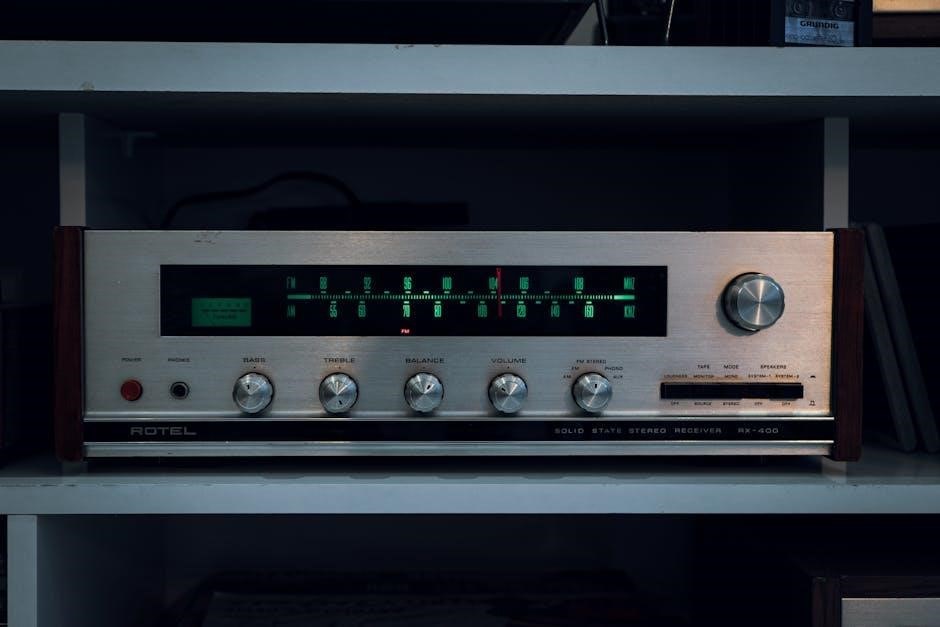
Onkyo AV Receiver Manual: A Comprehensive Guide
This guide details Onkyo AV receiver operation, covering models like HT-R510 and TX-RZ3100. Explore setup, features, troubleshooting, and support resources for optimal performance.
Onkyo AV receivers are renowned for delivering immersive home theater experiences, blending high-fidelity audio with cutting-edge technology. From entry-level models like the HT-R510 to premium units such as the TX-RZ3100, Onkyo caters to diverse audio-visual needs. These receivers serve as the central hub for connecting various components – Blu-ray players, gaming consoles, and speakers – orchestrating a seamless entertainment setup.
Understanding the core functionalities and features is crucial for maximizing your Onkyo receiver’s potential. This guide provides a comprehensive overview, covering everything from initial setup and connectivity options to advanced settings and troubleshooting common issues, ensuring a satisfying user experience.
Understanding Common Onkyo Receiver Models
Onkyo’s receiver lineup spans a wide range, each model offering a unique feature set. Popular choices include the HT-R510, a versatile entry-level option, and the TX-NR696, providing enhanced connectivity and power. For audiophiles, the TX-RZ3100 delivers exceptional performance and advanced calibration tools. The TX-SR series generally represents a more affordable range, while the TX-RZ series focuses on high-end audio quality and robust build.
Models like the TX-NR7100 and TX-RZ830 offer advanced features, catering to demanding home theater enthusiasts. Understanding these distinctions helps in selecting the ideal receiver for your specific needs and budget;
Popular Models: HT-R510, TX-NR696, TX-RZ3100
The HT-R510 is a great entry point, offering essential features for a home theater setup. The TX-NR696 steps up with more power and connectivity options, including network streaming capabilities. For a premium experience, the TX-RZ3100 boasts high-fidelity audio, advanced room correction, and robust build quality.
These models support various audio formats and offer seamless integration with other Onkyo components. Each provides a user-friendly experience, making them popular choices among consumers seeking reliable performance.
Model Variations: TX-SR Series vs. TX-RZ Series
The TX-SR series represents Onkyo’s standard receiver line, offering a balance of features and affordability. TX-RZ series receivers are the flagship models, prioritizing premium components and superior audio performance. RZ models often include more robust power supplies and advanced processing technologies.
Notably, the RI linked system function is disabled on TX-RZ models when Zone 2 is active. The RZ series generally provides a more refined listening experience for audiophiles and home theater enthusiasts.
Powering On and Basic Operations
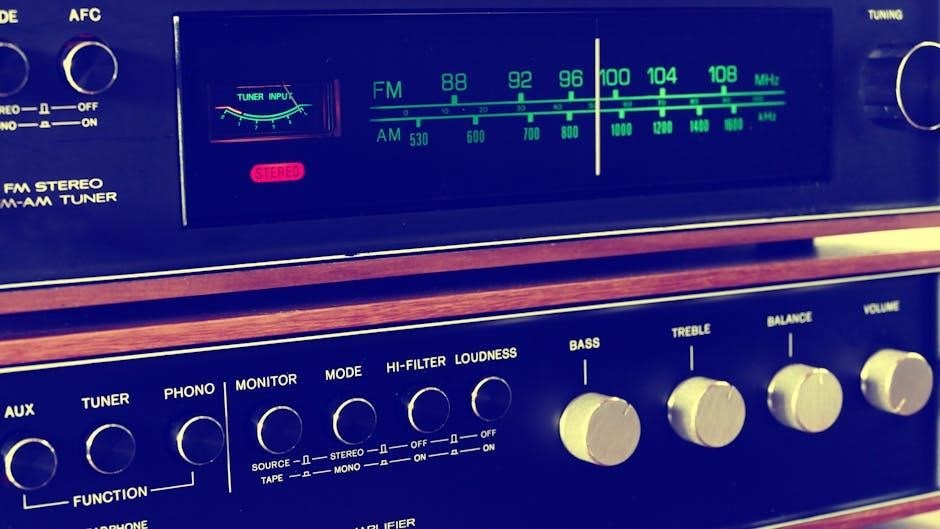
To power on your Onkyo receiver, simply press the ON/STANDBY button located on the front panel. This button toggles between operational and standby modes. Observe the indicator lights to confirm the receiver’s status. The Bluetooth indicator flashes during pairing and remains lit when connected.
Familiarize yourself with the front panel controls for basic operations like source selection and volume adjustment. Ensure proper speaker connections before powering on to avoid potential damage.
The ON/STANDBY Button Functionality
The ON/STANDBY button is central to receiver operation, switching between full power and a low-consumption standby state. A single press activates the receiver, initiating the boot-up sequence. Pressing it again returns the unit to standby, preserving recent settings.
In standby mode, some functions may remain active, such as network connectivity for firmware updates. Avoid repeatedly toggling the button in quick succession, as this could potentially disrupt the startup process.
Understanding Indicator Lights (Bluetooth, Zone 2)
Onkyo receivers utilize indicator lights to convey operational status. The Bluetooth indicator flashes during pairing with a Bluetooth-enabled device and remains lit once connected, confirming a successful link. Zone 2’s indicator illuminates when the multi-zone functionality is active, enabling audio playback in a secondary area.
Note that when Zone 2 is engaged, the RI linked system function – interlinking Onkyo components – is disabled. These lights provide quick visual cues regarding the receiver’s current state.
Connectivity Options & Input/Output
Onkyo AV receivers offer diverse connectivity, supporting various audio and video sources. Banana plugs are compatible for secure speaker wire connections, enhancing signal transfer and ease of use. Input/Output assignment configuration allows customization, directing specific sources to designated outputs.
Proper configuration ensures optimal audio routing and compatibility with your home theater setup. Explore the setup menu to tailor input assignments according to your preferences and connected devices.
Using Banana Plugs with Onkyo Receivers
Onkyo AV receivers readily accept banana plugs for simplified and secure speaker connections. These plugs eliminate the need to expose bare wire, reducing the risk of shorts and improving connection stability. Ensure a snug fit within the receiver’s speaker terminals for optimal signal transfer.
Banana plugs are particularly useful when frequently connecting and disconnecting speakers. They offer a clean and professional appearance, enhancing the overall aesthetic of your home theater installation.
Input/Output Assignment Configuration
Onkyo receivers offer flexible input/output assignment options within the setup menu. Users can customize which sources are routed to specific speaker configurations. This allows for tailored audio experiences based on content and preferences.
Proper configuration ensures correct audio signals reach the intended speakers. Explore the receiver’s settings to designate inputs for TV, Blu-ray player, or gaming consoles. Careful assignment optimizes sound quality and prevents audio routing conflicts, enhancing your home theater setup.
Setup and Configuration
Initial setup is streamlined with Onkyo’s Auto Start-up Wizard, particularly on models like the TX-RZ30. This guides users through speaker connections, network settings, and audio preferences. Alternatively, web setup provides advanced configuration options via a connected computer.
Careful configuration is crucial for optimal performance. Ensure correct speaker assignments and calibration for immersive sound. Explore the setup menu to customize parameters like crossover settings and equalization, tailoring the audio to your room’s acoustics.
Initial Setup with Auto Start-up Wizard (TX-RZ 30)
The TX-RZ 30’s Auto Start-up Wizard simplifies the initial configuration process. It guides you step-by-step through essential settings, including speaker connections and network setup. The wizard prompts for information regarding your speaker configuration – size, distance, and levels – to optimize sound quality;
Follow the on-screen instructions carefully to ensure accurate settings. The wizard also assists with connecting to your home network, enabling streaming and control features. Successful completion results in a properly configured receiver ready for enjoyment.
Web Setup for Advanced Configuration
For advanced customization, the TX-RZ 30 offers a comprehensive web setup interface. Access it through a web browser on your connected computer or mobile device. This interface provides granular control over settings beyond the on-screen menu.
Configure parameters like network settings, audio decoding preferences, and input assignments with precision. Web setup allows for detailed speaker calibration and zone configuration. It’s ideal for users seeking maximum control and optimization of their Onkyo receiver’s performance.

Advanced Features & Settings
Onkyo receivers boast a suite of advanced features for audiophiles and home theater enthusiasts. Explore multi-zone functionality (TX-RZ30) to distribute audio to different areas of your home independently. The RI Linked System facilitates seamless control between compatible Onkyo components, though it’s disabled when Zone 2 is active.
Delve into detailed settings for audio processing, speaker configuration, and network connectivity. These options allow for fine-tuning the receiver to match your specific setup and preferences, maximizing your listening experience.
Multi-Zone Functionality (TX-RZ30)
The Onkyo TX-RZ30 excels with its multi-zone capability, enabling independent audio playback in multiple areas. This feature allows you to enjoy different sources simultaneously – perhaps music in the living room and a movie soundtrack in the home theater. Configuration is accessible through the setup menu, defining zones and assigning sources.
However, note that activating Zone 2 disables the RI Linked System function, impacting inter-component control. Careful planning is crucial to balance multi-zone convenience with integrated system features.
RI Linked System Function & Limitations (Zone 2)
Onkyo’s RI Linked System facilitates seamless control between compatible Onkyo components, such as CD players and tuners. However, a key limitation arises when Zone 2 is activated on receivers like the TX-RZ30. Engaging Zone 2 automatically disables the RI Linked System functionality.
This means inter-component control features, like play/pause synchronization, will not operate while Zone 2 is active. Users should consider this trade-off when deciding whether to utilize multi-zone audio.
Troubleshooting Common Issues
A frequent issue reported by Onkyo AV receiver users is the “Select Model” display error; This typically indicates a communication problem during the initial setup or a disruption in the receiver’s settings. To resolve this, try power cycling the unit – disconnecting it from the mains for several minutes.
If the problem persists, consult the Onkyo support website (www.onkyousa.com) or contact their support line at 800-229-1687 for further assistance and potential firmware updates.
“Select Model” Display Error & Resolution
Encountering the “Select Model” message on your Onkyo receiver’s front display suggests a setup or communication fault. First, ensure all connections are secure, particularly speaker wires and HDMI cables. Next, perform a power cycle: disconnect the receiver from the power outlet for approximately five minutes, then reconnect.
If the error remains, visit www;onkyousa.com for authorized service centers or call Onkyo USA support at 800-229-1687. Firmware updates may also address this issue.
Audio Adjustments & Speaker Configuration
Onkyo receivers offer extensive audio customization options. Speaker settings and calibration are crucial for optimal sound. Utilize the auto-calibration feature, if available, to analyze your room’s acoustics. Manually adjust speaker levels, distances, and crossover frequencies for precise control.
Explore audio adjustment options like equalization and dynamic range compression. Proper speaker configuration ensures immersive and balanced audio reproduction, enhancing your listening experience. Refer to your model’s manual for detailed instructions.
Speaker Settings and Calibration
Accurate speaker settings are vital for optimal audio. Onkyo receivers allow precise adjustments for each speaker – size (large/small), distance, and level. Calibration, often automated, analyzes room acoustics. Utilize the built-in microphone for auto-setup, or manually adjust settings based on your room’s characteristics.
Ensure correct speaker polarity (+/-) and wiring. Fine-tune crossover frequencies to match speaker capabilities. Proper calibration delivers balanced, immersive sound, maximizing your Onkyo receiver’s potential.
Audio Adjustment Options
Onkyo receivers offer extensive audio controls. Adjust parameters like equalization (EQ) to tailor sound to your preference. Explore options for dynamic range compression (DRC) to manage volume levels. Utilize listening modes – Movie, Music, Game – optimized for specific content. Fine-tune the center channel level for clear dialogue.
Experiment with virtual surround sound technologies. Access advanced settings for precise audio customization. Remember to save preferred settings for quick recall, enhancing your overall listening experience.
Network & Streaming Capabilities
Onkyo receivers boast robust network connectivity, enabling seamless music streaming. Integrate with popular music servers for access to extensive libraries. Play music files directly from USB storage devices, supporting various formats. Utilize built-in Wi-Fi or Ethernet for network access. Explore internet radio stations and online streaming services.
Control playback via the Onkyo Controller app. Enjoy high-resolution audio streaming for superior sound quality. Ensure a stable network connection for uninterrupted listening.
Music Server Integration
Onkyo receivers seamlessly integrate with various music servers, expanding your audio options. Access your digital music library stored on networked devices. Supported protocols often include DLNA, allowing compatibility with many servers. Browse and play music files directly through the receiver’s interface or the Onkyo Controller app.
Ensure your music server and receiver are on the same network. Enjoy high-fidelity audio playback from your curated music collection. Explore server-specific setup instructions for optimal performance.
Playing Music Files from USB Storage
Onkyo receivers support playback of music files directly from USB storage devices. Connect a USB flash drive or external hard drive to the receiver’s USB port. Navigate the receiver’s menu to access the USB input and browse your music library. Compatible file formats typically include MP3, WAV, and FLAC.
Ensure the USB device is formatted with a compatible file system (FAT32 or NTFS). Enjoy convenient access to your digital music collection without needing a network connection.
Remote Control Operation
The Onkyo remote control provides comprehensive control over your AV receiver. Utilize the power button for on/standby, input selection buttons to switch sources, and volume controls for audio adjustment. Explore dedicated buttons for surround sound modes, listening presets, and accessing the setup menu.
Familiarize yourself with the cursor keys for navigating on-screen displays. Remember to insert batteries correctly for optimal functionality. Refer to the manual for specific button assignments and advanced remote features.
Firmware Updates & Maintenance
Regular firmware updates are crucial for maintaining optimal Onkyo AV receiver performance and accessing new features. Check the Onkyo USA website (www.onkyousa.com) for available updates compatible with your specific model – like the TX-RZ30. Follow the on-screen instructions carefully during the update process to avoid interruption.
For maintenance, periodically clean the receiver with a soft, dry cloth. Ensure proper ventilation to prevent overheating. Avoid placing objects on top of the unit.
Understanding the Setup Menu
The Onkyo AV receiver setup menu provides extensive customization options. Access it via the receiver’s on-screen display, navigating with the remote control. Key sections include speaker configuration, audio settings, input assignments (TX-RZ30), and network settings. Explore options like multi-zone control (TX-RZ30) and RI Linked system functionality.
Familiarize yourself with the menu structure to optimize your listening experience. Refer to your model’s manual for detailed explanations of each setting.
Bluetooth Pairing & Operation
Onkyo receivers offer seamless Bluetooth connectivity for wireless audio streaming. Initiate pairing mode through the setup menu or by pressing the Bluetooth button on the remote. The Bluetooth indicator will flash during pairing and remain lit once connected. Ensure your device is discoverable.
Once paired, enjoy music from smartphones, tablets, or other Bluetooth-enabled devices. Remember that RI Linked system function is disabled while ZONE 2 is active.
Text Information Display
Certain Onkyo AV receivers can display text information received from radio stations broadcasting such data. This feature enhances the listening experience by providing song titles, artist names, or other relevant details directly on the receiver’s display panel. Compatibility depends on the broadcasting station’s capabilities.
Check your receiver’s settings to ensure text display is enabled. The functionality is available when receiving stations transmitting this specific type of information.
Onkyo Support & Service Centers
For assistance with your Onkyo AV receiver, numerous support options are readily available. Authorized Independent Service Centers can provide professional repairs and maintenance. Locate a center by visiting www.onkyousa.com under the “Support” section, or by contacting Onkyo USA directly.
You can reach Onkyo USA Support at 800-229-1687 to find the nearest authorized service location. When contacting support, include your name, address, email, or phone number for efficient assistance.
Finding Authorized Service Centers (www.onkyousa.com)
To locate an Onkyo Authorized Independent Service Center, navigate to the official Onkyo USA website at www.onkyousa.com. Within the “Support” section, you’ll find a dedicated tool for searching nearby service providers. This resource ensures you receive qualified repairs and maintenance for your AV receiver.
The website provides a comprehensive directory, allowing you to find a center based on your location. Ensure you choose an authorized center to maintain your receiver’s warranty and performance standards.
Contacting Onkyo USA Support (800-229-1687)

For direct assistance with your Onkyo AV receiver, contact Onkyo USA Support at 800-229-1687. Their knowledgeable representatives can address troubleshooting, warranty inquiries, and general product questions. Be prepared to provide your receiver’s model number and a detailed description of the issue.
When contacting support, it’s helpful to include your contact information – name, address, email, or phone number – for efficient follow-up and resolution of your concerns.
Manual Download Resources
Access comprehensive Onkyo AV receiver manuals online through various resources. The Internet Archive hosts user manuals, like the HT-R8230, offering free download, borrowing, and streaming options in PDF, JP2 ZIP, and TORRENT formats. Explore The Manual Library for additional collections and resources.
These platforms provide valuable documentation for setup, operation, troubleshooting, and advanced features of your Onkyo receiver, ensuring you have the information needed for optimal performance and enjoyment.
Internet Archive Resources (HT-R8230)
The Internet Archive provides a readily accessible Onkyo HT-R8230 user manual for free download and streaming. Users can choose from multiple file formats, including PDF, single-page processed JP2 ZIP, and TORRENT downloads. A total of thirteen files are available, offering comprehensive documentation.
This resource is invaluable for owners seeking detailed instructions, troubleshooting guidance, or simply a digital copy of their receiver’s manual for convenient access.
The Manual Library & Additional Collections

Beyond the Internet Archive, numerous online resources host Onkyo receiver manuals. The Manual Library offers a curated collection of Onkyo documentation, supplementing the Archive’s offerings. These additional collections provide broader access to manuals for various Onkyo models, including receivers, amplifiers, and home theater systems.
Users can explore these libraries to find specific manuals or browse related documentation for a complete Onkyo audio experience.