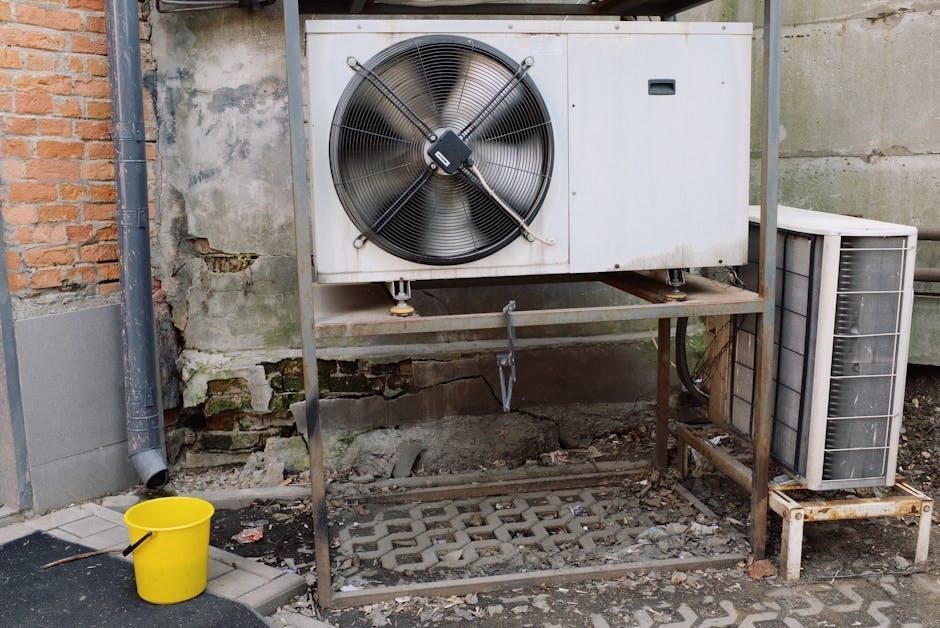
JHS offers convenient, efficient cooling solutions for any room. This manual guides you through setup, operation, and maintenance for optimal performance.
What is a JHS Portable Air Conditioner?
A JHS Portable Air Conditioner is a self-contained cooling system designed to provide relief from heat without the need for permanent installation. Unlike traditional window units or central air conditioning, a JHS portable AC doesn’t require complex mounting or professional assistance.
It’s a freestanding unit on wheels, allowing for easy movement between rooms. These units draw in warm air, cool it using a refrigerant, and then exhaust the hot air outside through a provided hose – typically vented through a window.
JHS models often include multiple functions beyond just cooling, such as fan-only operation for air circulation and a dehumidifying mode to reduce moisture levels. They are an excellent option for renters, those with limited space, or anyone needing targeted cooling in specific areas.
Why Use a Portable Air Conditioner?
JHS Portable Air Conditioners offer a versatile cooling solution with numerous advantages. They are ideal for spaces where window units aren’t feasible, or central air isn’t available, like apartments, offices, or older homes. Their portability allows you to direct cooling where it’s needed most, avoiding unnecessary cooling of unoccupied rooms.
Unlike permanent installations, they require no professional help for setup, making them a cost-effective option. Many models also function as dehumidifiers, improving air quality and comfort.
Furthermore, portable ACs are energy-efficient, consuming less power than central air systems, potentially lowering your electricity bills. They provide a convenient and adaptable way to stay cool and comfortable throughout the warmer months.

Unboxing and Initial Setup
Carefully unpack your JHS unit and components. Ensure a clear workspace for assembly, referencing the parts list for a smooth setup process.
Package Contents Checklist
Before beginning, verify all components are present. Your JHS Portable Air Conditioner package should include: the Air Conditioner Unit itself, an Exhaust Hose (typically in two or more sections), a Window Kit (designed for vertical or horizontal windows), a Power Cord, a Remote Control (with batteries included or specified battery type), and this User Manual.
Additionally, check for the Drain Plug/Cap, and potentially, foam side panels for window kit customization. Some models may include ice packs for enhanced cooling. Carefully compare the physical contents against this list. If any items are missing or appear damaged, do not operate the unit and immediately contact JHS customer support for assistance and replacement parts. Retain all original packaging for potential returns or warranty claims.
Initial Inspection for Damage
Carefully inspect the JHS Portable Air Conditioner and all its components for any signs of shipping damage. Look for dents, cracks, or broken parts on the unit’s exterior, the exhaust hose, the window kit, and the remote control. Pay close attention to the fins on the rear of the air conditioner, ensuring they are not bent or crushed.
Check the power cord for cuts or fraying. If you notice any damage, do not plug the unit in. Contact JHS customer support immediately to report the damage and arrange for a replacement or repair. Document any visible damage with photographs as evidence for your claim. Operating a damaged unit could be hazardous and will void your warranty.
Setting Up the Exhaust Hose
Proper exhaust hose installation is crucial for efficient operation. Connect the exhaust hose to the back of the JHS Portable Air Conditioner, ensuring a secure, clockwise twist-lock connection. Extend the window kit to fit your window opening and attach the window brackets.
Insert the other end of the exhaust hose into the designated opening in the window kit, again twisting to lock it in place. Seal any gaps around the window kit with the provided foam strips to prevent hot air from re-entering the room. Important: Ensure the hose isn’t kinked or excessively bent, as this restricts airflow and reduces cooling performance.

Operating Your JHS Portable Air Conditioner
JHS portable AC units offer versatile cooling options. This section details how to utilize cooling, fan, and dehumidifying modes for your comfort.
Powering On and Basic Controls
To begin, ensure the unit is plugged into a grounded outlet. The power button, typically located on the control panel or remote, initiates operation. A clear indicator light will illuminate, confirming power.
The control panel features intuitive buttons for mode selection (Cool, Fan, Dehumidify), temperature adjustment (up/down arrows), and fan speed control (Low, Medium, High). Use these buttons to customize your cooling experience. The remote control duplicates these functions for convenient, long-distance operation.
For initial use, we recommend starting with the ‘Auto’ fan speed setting in Cooling mode. This allows the unit to automatically adjust fan speed based on the desired temperature. Experiment with different settings to find your preferred comfort level. Always refer to the display panel for current settings.
Cooling Mode Explained
Cooling mode actively reduces room temperature by utilizing a refrigeration cycle. When activated, the compressor engages, circulating refrigerant to absorb heat from the air. The fan then blows this cooled air into the room, providing a refreshing breeze.
To operate, select ‘Cool’ on the control panel and set your desired temperature using the up/down arrows. The unit will automatically adjust its cooling output to maintain the set temperature. Remember to ensure the exhaust hose is properly connected to vent hot air outside.
For optimal performance, close windows and doors to prevent warm air from entering. The cooling capacity is measured in BTUs (British Thermal Units); higher BTU ratings are suitable for larger spaces. Regularly check the water tank level, as condensation is a byproduct of the cooling process.
Fan Mode Explained
Fan mode provides air circulation without actively cooling the air. This mode is ideal for simply moving air around a room, offering a gentle breeze and improving ventilation. Unlike cooling mode, the compressor does not engage in fan mode, resulting in lower energy consumption.
To activate, select ‘Fan’ on the control panel. You can typically adjust the fan speed to your preference – low, medium, or high. This mode is particularly useful when combined with natural cooling sources like open windows, or when you only require air movement and not temperature reduction.
Consider using fan mode to distribute cooled air from another source, or to help evaporate moisture after dehumidifying. It’s a versatile option for maintaining comfortable airflow without the intensity of active cooling.
Dehumidifying Mode Explained
Dehumidifying mode actively removes excess moisture from the air, creating a more comfortable environment, especially in damp climates or humid rooms. Unlike cooling mode, dehumidifying prioritizes moisture removal over temperature reduction, though a slight cooling effect may be noticeable.

To operate, select ‘Dry’ or ‘Dehumidify’ on the control panel. The unit will draw in air, condense the moisture, and collect it in the internal water tank. Regularly emptying the tank is crucial for continued operation (see ‘Emptying the Water Tank’ section).
This mode is beneficial for preventing mold and mildew growth, reducing musty odors, and improving overall air quality. It’s perfect for basements, bathrooms, or any area prone to high humidity levels. Some models offer continuous drain options.

Advanced Features & Settings
Explore enhanced functionalities like precise temperature control, convenient timer settings, and a relaxing sleep mode for personalized comfort and efficiency.
Temperature Control & Adjustment
Your JHS portable air conditioner allows for precise temperature adjustments to create your ideal comfort level. Use the “Temp Up” and “Temp Down” buttons on the control panel, or the remote control, to set your desired temperature. The display will show the set temperature.
The unit operates within a range of 61°F to 90°F (16°C to 32°C). Pressing the buttons will adjust the temperature in 1°F (or 1°C) increments. Allow several minutes for the unit to reach the newly set temperature. Note that extremely high or low ambient temperatures may affect the unit’s cooling capacity. For optimal performance, ensure doors and windows are closed to maintain the desired temperature efficiently. Remember to consider your personal comfort preferences when selecting a temperature.
Timer Function – Setting and Use
The JHS portable air conditioner features a convenient timer function for automated operation. To set the timer, press the “Timer” button on the control panel or remote. Use the “Temp Up” and “Temp Down” buttons to adjust the timer duration, in hours. The display will show the remaining time before the unit automatically shuts off.
You can set the timer for between 1 and 24 hours. Once set, the unit will continue running for the specified duration and then turn off automatically. To cancel the timer, press the “Timer” button again. This is useful for scheduling operation during off-peak hours or ensuring the unit turns off before you wake up. Always double-check the set timer duration for accurate operation.
Sleep Mode – Benefits and Operation
The Sleep Mode on your JHS portable air conditioner is designed for comfortable overnight cooling. When activated, the unit gradually increases the temperature over time, preventing excessive cooling while you sleep and saving energy. This feature also subtly reduces fan speed for quieter operation, minimizing disturbance;
To activate Sleep Mode, press the dedicated “Sleep” button on the control panel or remote control. The display will indicate Sleep Mode is active. The temperature will automatically increase by 1-2°C over the first few hours. To exit Sleep Mode, simply press the “Sleep” button again, or manually adjust the temperature settings. Enjoy a peaceful and energy-efficient night’s sleep with this convenient feature!

Maintenance and Cleaning
Regular maintenance ensures peak performance and longevity. Cleaning filters and emptying the tank are crucial for efficient, healthy operation of your JHS unit.
Cleaning the Air Filter
Maintaining a clean air filter is paramount for optimal performance and air quality. The filter traps dust, allergens, and other particles, preventing them from circulating within your space. Regular cleaning – ideally every two weeks during heavy use, or monthly with moderate use – ensures efficient cooling and prevents strain on the unit’s compressor.
To clean the filter, first power off and unplug the air conditioner. Locate the filter access panel, usually on the rear or side of the unit. Gently remove the filter. Vacuum the filter to remove loose debris. For a deeper clean, wash the filter with mild soap and lukewarm water. Rinse thoroughly and allow it to dry completely before reinstalling. Never operate the unit without a filter, or with a damp filter, as this can cause damage.
Emptying the Water Tank
During dehumidifying mode, or when operating in cooling mode with high humidity, your JHS portable air conditioner collects condensation in an internal water tank. Regularly emptying this tank is crucial to prevent overflow and ensure continued operation. The unit will typically display a warning indicator or automatically shut off when the tank is full.
To empty the tank, power off and unplug the air conditioner. Locate the water tank, usually accessible from the rear of the unit. Carefully remove the tank, being mindful of any remaining water. Empty the water into a suitable drain and thoroughly rinse the tank with clean water. Ensure the float inside the tank is free to move before reinstalling it securely. Always reinsert the tank correctly to avoid leaks or malfunctions.
Descaling the Unit (If Applicable)
Depending on your water hardness, mineral deposits may accumulate inside your JHS portable air conditioner, reducing its efficiency. Descaling removes these deposits, restoring optimal performance. This process is particularly important if you notice reduced cooling or increased noise. Check your specific model’s features; not all units require descaling.
If descaling is needed, power off and unplug the unit. Consult the full manual for specific descaling solution recommendations – avoid harsh chemicals. Follow the solution’s instructions, typically involving running the solution through the unit in dehumidifying mode. Thoroughly rinse the tank with clean water multiple times after descaling to remove any residue. Regular descaling, as needed, will prolong the life of your air conditioner.

Troubleshooting Common Issues
Encountering problems? This section provides solutions for typical issues with your JHS portable air conditioner, ensuring quick and easy resolutions.
Unit Not Turning On
Problem: Your JHS portable air conditioner fails to power on, even when the power button is pressed. This is often a simple fix, but requires systematic checking.
Possible Causes & Solutions:
- Power Cord: Ensure the power cord is securely plugged into both the unit and a functioning wall outlet. Test the outlet with another device.
- Power Button: Confirm the power button is fully engaged. Sometimes a gentle, firm press is needed.
- Circuit Breaker/Fuse: Check your home’s circuit breaker or fuse box. A tripped breaker or blown fuse will prevent power. Reset or replace as needed.
- Internal Fuse (if applicable): Some models have an internal fuse. Consult the unit’s diagram (usually near the power cord entry) to locate and check it;
- Control Panel Lock: Verify the control panel isn’t locked, preventing operation.
If the unit still doesn’t turn on after these checks, contact JHS customer support.
Insufficient Cooling
Problem: Your JHS portable air conditioner is running, but isn’t cooling the room effectively. Several factors can contribute to reduced cooling performance.
Possible Causes & Solutions:
- Exhaust Hose: Ensure the exhaust hose is correctly connected to the unit and properly vented outside. Any gaps will allow hot air to re-enter.
- Air Filter: A dirty air filter restricts airflow. Clean or replace the filter regularly (see Maintenance section).
- Room Size: Verify the unit’s BTU rating is appropriate for the room size. An undersized unit will struggle to cool larger spaces.
- Doors & Windows: Keep doors and windows closed to prevent warm air from entering.
- Direct Sunlight: Minimize direct sunlight exposure by closing curtains or blinds.
If cooling remains insufficient after addressing these points, contact JHS customer support for assistance.
Error Codes and Their Meanings
Your JHS portable air conditioner utilizes error codes to indicate specific malfunctions. Refer to this list to diagnose and potentially resolve issues.
Error Code | Meaning | Possible Solution
- E1: Temperature sensor error. – Power cycle the unit. If persists, contact support.
- E2: Compressor overload protection. – Allow unit to rest for several hours, then restart.
- E3: Water tank full. – Empty the water tank (see Maintenance section).
- E4: Exhaust hose issue. – Check exhaust hose connection and ensure proper venting.
- E5: Fan motor failure. – Contact JHS customer support for repair options.

Safety Precautions
Always unplug the unit before cleaning. Ensure proper grounding and avoid using extension cords. Keep away from flammable materials and water.
Electrical Safety Guidelines
To ensure safe operation, always plug the JHS Portable Air Conditioner directly into a grounded outlet. Avoid using adapters or extension cords, as they can overheat and pose a fire risk; Regularly inspect the power cord for any signs of damage – cracks, fraying, or exposed wires – and discontinue use if damage is found.
Never operate the unit with a damaged cord or plug. If the power cord is damaged, it must be replaced by a qualified technician. Do not handle the appliance with wet hands or operate it in damp environments. Ensure the voltage supplied matches the unit’s specifications (listed on the nameplate). Disconnect the unit from the power source during thunderstorms or prolonged periods of non-use. Improper electrical connection voids the warranty and can be dangerous.
Proper Ventilation Requirements
Effective operation of your JHS Portable Air Conditioner relies heavily on proper ventilation. The exhaust hose must be vented to the outside, directing hot air away from the cooled space. Ensure the exhaust hose is not kinked, bent sharply, or excessively long, as this restricts airflow and reduces cooling efficiency.
Avoid placing the unit near curtains or other obstructions that could block the exhaust airflow. A window kit is provided for easy venting; ensure it’s securely installed to prevent hot air from re-entering the room. Do not operate the unit in a confined space without proper ventilation, as this can lead to a buildup of heat and potentially damage the unit.