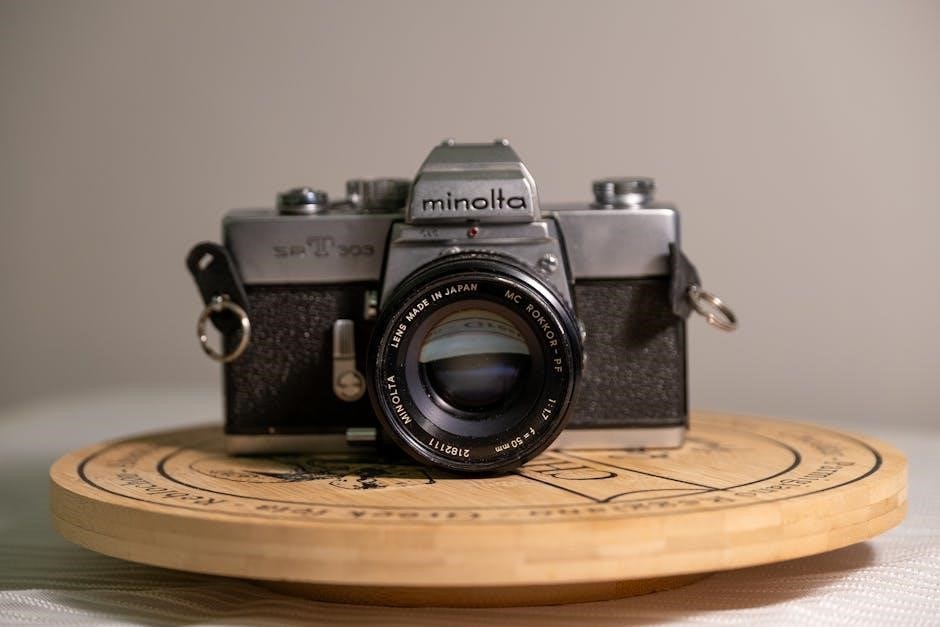
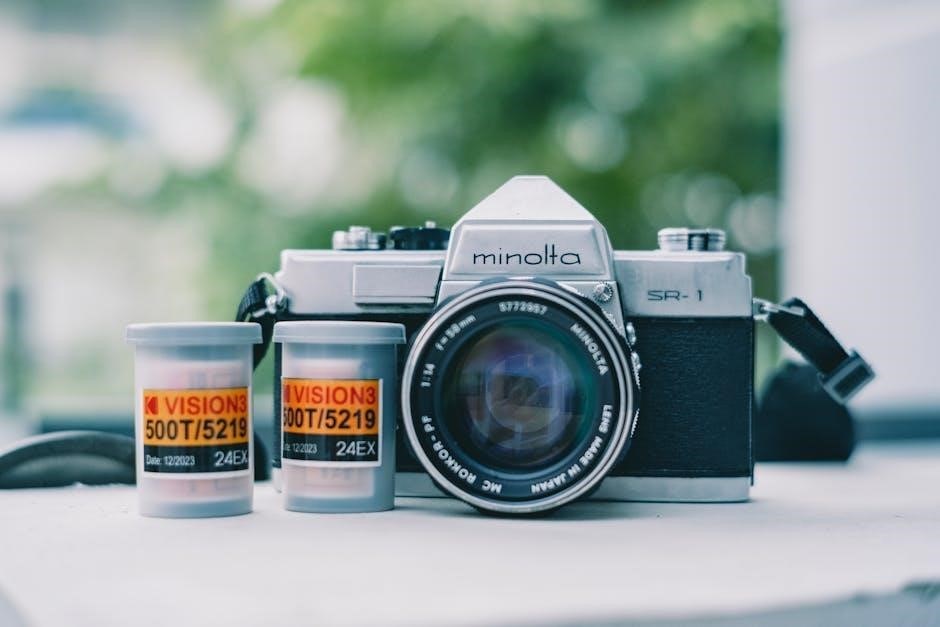
The Minolta SRT 101, a classic 35mm SLR, boasts readily available instruction and service manuals online, including PDF formats from the Internet Archive.
Numerous resources offer free downloads, catering to users seeking guidance on operation, repair, and alternative battery options for this iconic camera.
Overview of the Camera
The Minolta SRT 101, launched in 1969, quickly became a favorite among photography enthusiasts. Its appeal stems from a blend of robust build quality and accessible features.
Detailed instruction manuals, now widely available as PDFs, demonstrate its straightforward operation. These guides cover everything from film loading to exposure settings. The camera’s electronic shutter prioritizes accuracy, and its modular design allows for lens interchangeability, enhancing its versatility.
Historical Significance of the SRT 101
The Minolta SRT 101 marked a pivotal moment in camera technology, popularizing electronic shutter control within the SLR market. Its introduction coincided with a growing demand for user-friendly, yet capable, photographic tools.
The availability of comprehensive instruction manuals – now digitized and freely accessible – contributed to its widespread adoption. These manuals empowered a generation of photographers, solidifying the SRT 101’s place as a historically significant camera.
Camera Components and Controls
The SRT 101’s controls, detailed in available manuals, include a shutter speed dial, aperture ring, and focusing mechanism, all essential for photographic control.
Shutter Speed Dial and Operation
The Minolta SRT 101’s shutter speed dial, as explained in the instruction manuals, allows selection from 1 second to 1/1000th of a second, plus Bulb mode for long exposures.
It’s located on the top plate and operates with a distinct click, ensuring accurate setting. The ‘B’ setting requires a separate cable release for exposures exceeding one second, preventing camera shake.
Proper operation is crucial for controlling motion blur and achieving desired photographic effects, as detailed in available PDF guides.
Aperture Control and f-Stop Settings
The SRT 101’s aperture is controlled via the lens itself, not the camera body, as detailed in the user manuals. f-stop settings, typically ranging from f/2.8 to f/16 or higher, dictate depth of field and light intake.
Adjusting the aperture ring on the lens directly impacts image brightness and the area in focus.
Understanding this relationship, explained in downloadable PDF guides, is key to achieving creative control over your photographs.
Focusing Mechanism and Viewfinder
The Minolta SRT 101 employs a split-image rangefinder focusing system, detailed in available instruction manuals. Through the viewfinder, you align a blurred image with a central split, achieving sharp focus when the two halves merge.
PDF guides illustrate this process, alongside explanations of the viewfinder’s brightness and focusing aids.
Precise focusing is crucial for image quality, and mastering this system is well-documented.

Loading and Unloading Film
The SRT 101’s film loading procedure is clearly outlined in downloadable manuals. These guides detail film type compatibility and step-by-step instructions for both loading and rewinding.
Film Type Compatibility
The Minolta SRT 101 is designed for use with standard 35mm film formats, including black and white, color negative, and color slide (transparency) films. Manuals readily available online confirm compatibility with ISO 25 to 3200 speed films.
Users should consult the instruction manual for optimal settings based on their chosen film stock, ensuring proper exposure and image quality.
Film Loading Procedure
To load film into the Minolta SRT 101, open the camera back using the release latch. Place the film canister on the left side and thread the film leader onto the take-up spool on the right.
Advance the film a few times, ensuring it catches properly, then close the camera back. The manual emphasizes gentle handling to avoid damage.
Film Rewinding Instructions
Rewinding film on the Minolta SRT 101 requires pressing the rewind release button on the camera base. Then, turn the rewind crank clockwise until you feel resistance lessen – indicating the film is fully back in the canister.
The manual advises a smooth, consistent rewind speed to prevent film tearing and ensure complete retrieval of your photographs.

Exposure Settings and Metering
The SRT 101 utilizes a center-weighted metering system; the manual details using the exposure compensation dial for accurate readings in challenging lighting conditions.
Understanding the Metering System
The Minolta SRT 101 employs a center-weighted metering system, prioritizing light measurement in the central portion of the viewfinder frame. This means the camera is most sensitive to the light levels within that central area, influencing exposure calculations.
The manual explains that this system is designed to mimic how the human eye perceives light, offering generally accurate exposures in typical shooting scenarios. However, users should be aware that strong backlighting or predominantly dark/light scenes can affect metering accuracy, necessitating exposure compensation adjustments.
Using the Exposure Compensation Dial
The SRT 101’s exposure compensation dial, located around the shutter speed dial, allows users to override the camera’s metering system. This is crucial when shooting scenes with extreme brightness or darkness, ensuring proper exposure.
The manual details that turning the dial towards the “+” sign increases exposure (brighter image), while “-” decreases it (darker image). Increments are typically in half or full stops, providing precise control over the final image’s brightness.
Setting ISO Sensitivity
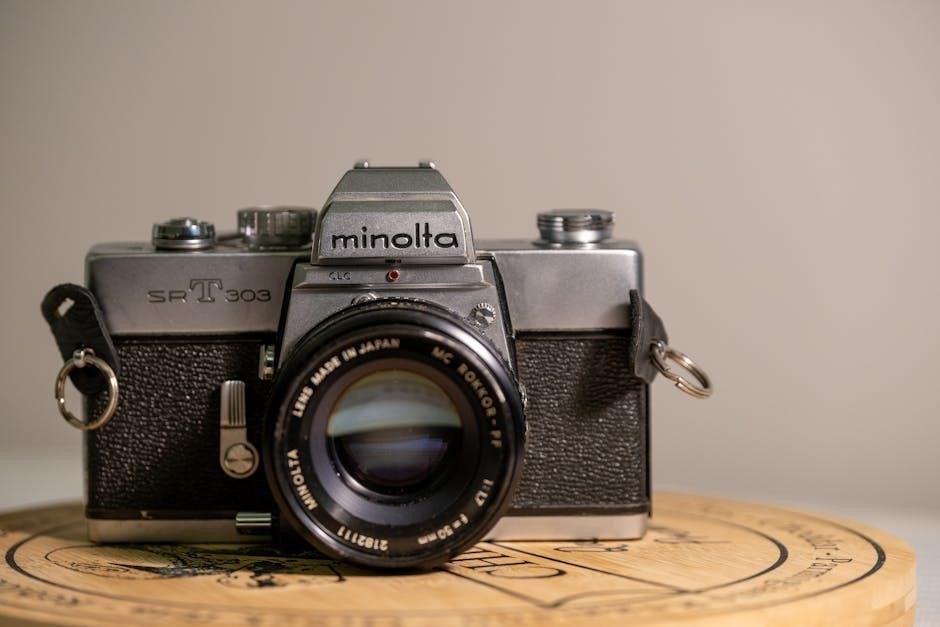
The Minolta SRT 101 features a film speed dial, typically ranging from 20 to 3200 ISO, located around the film rewind knob. Setting the correct ISO is vital for accurate metering.
The instruction manual emphasizes matching the dial to the ISO rating of the loaded film. Incorrect settings will result in under or overexposed images. Remember to reset the dial each time you change film types!
Using the Self-Timer
The SRT 101’s self-timer is activated by a lever located below the shutter speed dial, providing a delay for posed shots or remote operation.
Activating the Self-Timer
To engage the self-timer on the Minolta SRT 101, locate the small lever positioned just below the shutter speed dial. Push this lever down to the right; you’ll feel a slight resistance.
This action initiates a roughly 10-second delay before the shutter releases. The lever remains depressed during this countdown. Compose your shot and position yourself accordingly, as the camera will automatically take the picture after the set duration.
Remember to return the lever to its original position after use.
Self-Timer Duration
The Minolta SRT 101’s self-timer provides approximately a 10-second delay between activation and shutter release. This duration allows sufficient time for the photographer to enter the frame.
While not precisely adjustable, this timeframe is generally adequate for most self-portrait or group shot scenarios. Note that slight variations may occur due to battery strength or mechanical condition;
Plan your movements accordingly to ensure you are fully prepared before the shutter fires.
Flash Photography with the SRT 101
The SRT 101 features a hot shoe for flash attachment, enabling synchronized illumination. Understanding the flash synchronization speed is crucial for optimal results.
Hot Shoe Connection
The Minolta SRT 101 is equipped with a standard hot shoe, allowing for a direct electrical connection between the camera and compatible flash units. This connection facilitates synchronized flash firing, triggered precisely with the shutter release.
Utilizing a hot shoe ensures proper exposure and eliminates the need for manual flash synchronization techniques. Ensure the flash unit is securely mounted onto the hot shoe for a stable and reliable connection during photographic operations.
Flash Synchronization Speed
The Minolta SRT 101 features a flash synchronization speed of 1/60th of a second. This is the maximum shutter speed at which the flash can be used to properly expose the image, preventing a portion of the image from being darkened by the shutter curtain.
Exceeding this speed will result in incomplete illumination. Always set the shutter speed to 1/60th second or slower when employing flash photography with this camera for optimal results.

Troubleshooting Common Issues
Common SRT 101 problems include shutter malfunctions and metering inaccuracies; online resources and service manuals offer guidance for diagnosing and resolving these issues.
Shutter Problems
If the SRT 101’s shutter isn’t firing, or operates inconsistently, the service manual is crucial for diagnosis. Issues can range from simple mechanical obstructions to more complex problems within the shutter mechanism itself.
Carefully consult the schematics within the manual to understand the shutter’s internal workings. Often, cleaning and lubrication, as detailed in the service guide, can resolve sticking or slow shutter speeds.
Metering Inaccuracies
Should the SRT 101’s light meter provide incorrect readings, the service manual guides troubleshooting. Potential causes include aging components within the metering system or issues with the battery providing insufficient power.
The manual details how to check the meter’s calibration and offers insights into potential repair procedures. Remember to verify the ISO setting, as an incorrect setting directly impacts metering accuracy.
Film Advance Issues
If experiencing difficulties with film advance, the SRT 101’s service manual suggests inspecting the mechanical linkages. Check for obstructions or damage to the film advance lever, gears, and take-up spool.
Ensure proper film loading, as incorrect placement can hinder smooth advancement. The manual provides detailed diagrams illustrating the correct film path and component interaction for optimal operation.
Battery Replacement and Alternatives
The SRT 101 originally used a mercury battery, now unavailable; however, online manuals detail modern adaptor options and equivalent battery choices for continued metering function.
Original Mercury Battery
Originally, the Minolta SRT 101 relied on a mercury battery to power its light meter. These batteries, specifically a PX-28 or similar, are no longer manufactured due to environmental concerns regarding mercury content.
Consequently, finding an original battery is extremely difficult and generally not recommended. Manuals emphasize the need for alternatives, as using a modern alkaline battery directly will not provide the correct voltage and can damage the camera’s circuitry.
Modern Battery Adaptors and Equivalents
Fortunately, several modern solutions exist for powering the SRT 101’s meter. Battery adaptors are readily available, allowing the use of common alkaline or silver-oxide batteries like LR44 or SR44.
These adaptors often include a voltage-reducing resistor to simulate the 1.35V of the original mercury cell. Resources linked in manuals suggest specific adaptors and configurations for accurate metering, ensuring proper exposure readings with contemporary power sources.
Maintenance and Care
Regular cleaning of the lens and proper storage are crucial for maintaining the Minolta SRT 101’s functionality and longevity, as detailed in available manuals.
Cleaning the Lens
Maintaining a clean lens is vital for optimal image quality with the Minolta SRT 101. Use a soft, lint-free cloth and specialized lens cleaning solution.
Avoid harsh chemicals or abrasive materials that could damage the coating. Gently wipe in a circular motion, removing dust and fingerprints.
Refer to the instruction manual for specific recommendations, ensuring careful handling to preserve the lens’s clarity and performance over time.
Storage Recommendations
Proper storage protects your Minolta SRT 101. The instruction manual suggests a cool, dry place, away from direct sunlight and extreme temperatures.
Store the camera with the lens capped and body covered to prevent dust accumulation. Remove batteries for prolonged storage to avoid corrosion.
A dedicated camera bag offers further protection against impacts and environmental factors, ensuring longevity and readiness for your next photographic adventure.

Advanced Features and Techniques
The SRT 101 allows depth of field control and lens versatility, enhancing creative possibilities. Manuals detail techniques for optimal image quality and artistic expression.
Depth of Field Control
Mastering depth of field with the Minolta SRT 101 involves understanding the interplay between aperture settings and focusing distance. The instruction manuals emphasize utilizing the f-stop ring to adjust the aperture, directly impacting the area in focus.
Smaller apertures (higher f-numbers) yield greater depth of field, ideal for landscapes, while wider apertures (lower f-numbers) create shallow depth of field, perfect for isolating subjects. Precise focusing, guided by the viewfinder, is crucial for achieving the desired effect.
Using Different Lenses
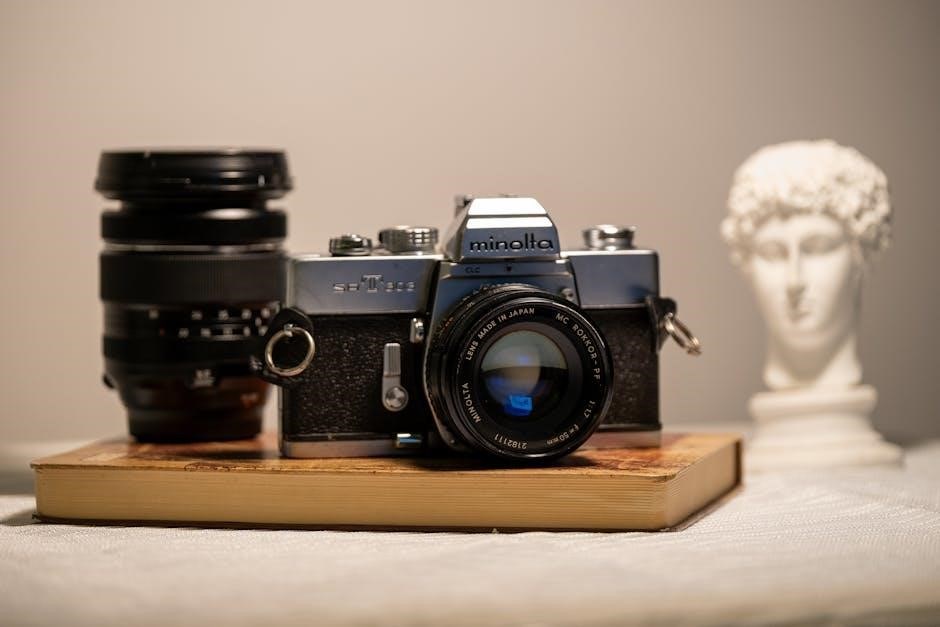
The Minolta SRT 101 features a 42.5mm screw mount, enabling compatibility with a wide range of Minolta MC and MD lenses. Instruction manuals detail the simple process of attaching and detaching lenses by aligning the red dots.
Adapters also exist, expanding compatibility to lenses from other manufacturers. Ensure proper alignment and a secure fit to maintain optimal image quality and avoid damage to the camera or lens.

Service Manual Information
The SRT 101 service manual, available as a PDF via the Internet Archive, provides schematics and repair information for skilled technicians and enthusiasts.
Accessing the Service Manual
The Minolta SRT 101 service manual is readily accessible through the Internet Archive (archive.org). Search for “minolta-srt-101-service-manual” to locate the downloadable PDF.
This resource, identified as ark:/13960/s24j5tp638h, offers detailed schematics and repair information. The document was processed using tesseract OCR, ensuring text searchability for convenient troubleshooting and maintenance guidance.
Understanding Schematics
The SRT 101 service manual’s schematics are crucial for repair, detailing the camera’s internal wiring and component layout. These diagrams, found within the PDF available on the Internet Archive, illustrate the connections between parts.
Understanding these schematics requires basic electronics knowledge, aiding in diagnosing issues and performing accurate repairs. They are essential for advanced users tackling complex servicing tasks.
Resources and Further Information
Online forums and communities offer valuable support for SRT 101 users, alongside downloadable PDF manuals from sites like the Internet Archive.
Online Forums and Communities
Numerous online platforms dedicate space to the Minolta SRT 101, fostering a vibrant community of enthusiasts. These forums are invaluable for troubleshooting, sharing experiences, and accessing collective knowledge regarding the camera’s operation and repair.
Users frequently share links to downloadable instruction manuals and service guides, including those found on the Internet Archive, creating a readily accessible resource network for all SRT 101 owners.
PDF Manual Download Locations
Several websites host readily available PDF versions of the Minolta SRT 101 instruction manual. The Internet Archive (archive.org) provides a free download option, identified as “minolta-srt-101-service-manual”.
Additional sites, often linked within online forums, offer user manuals in multiple languages, alongside service manuals for more in-depth repair information, ensuring accessibility for all users.